Year 5
In this lesson:
National
curriculum
link
Credit & Risk
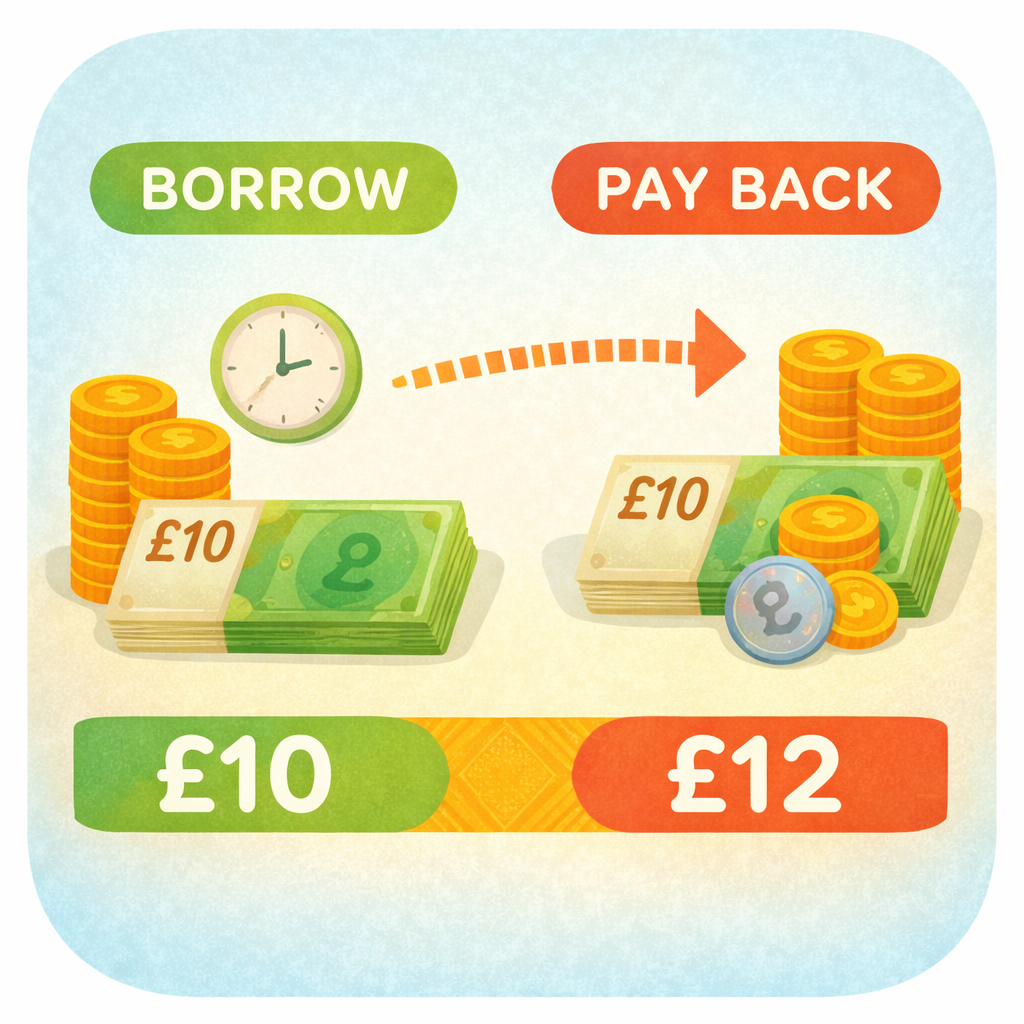
Pupils learn what it means to borrow money and why it can sometimes be helpful but also risky. They explore the idea that borrowing means paying money back later, often with extra cost called interest. Through everyday examples, children consider when borrowing might be a sensible choice for a need, and when it may not be appropriate for a want. Pupils practise thinking carefully about risk, responsibility, and the long term impact of borrowing money.
Maths:
PSHE:
This lesson supports the Year 1 National Curriculum for Mathematics M3 and M4 by enabling pupils to compare amounts of money, reason about differences between what is borrowed and what is repaid, and solve practical problems involving simple calculations of totals including additional costs. Pupils develop comparative reasoning when considering how larger amounts borrowed lead to greater overall repayment.
This lesson supports PSHE Economic Wellbeing objectives L22, L12 and L18 by helping pupils understand that borrowing money involves responsibility and risk, recognise that borrowed money must be repaid with additional cost, and develop awareness of careful decision making when considering needs, wants and financial consequences.
Skill descriptor: