Year 8
IN THIS LESSON
National
Curriculum
Links
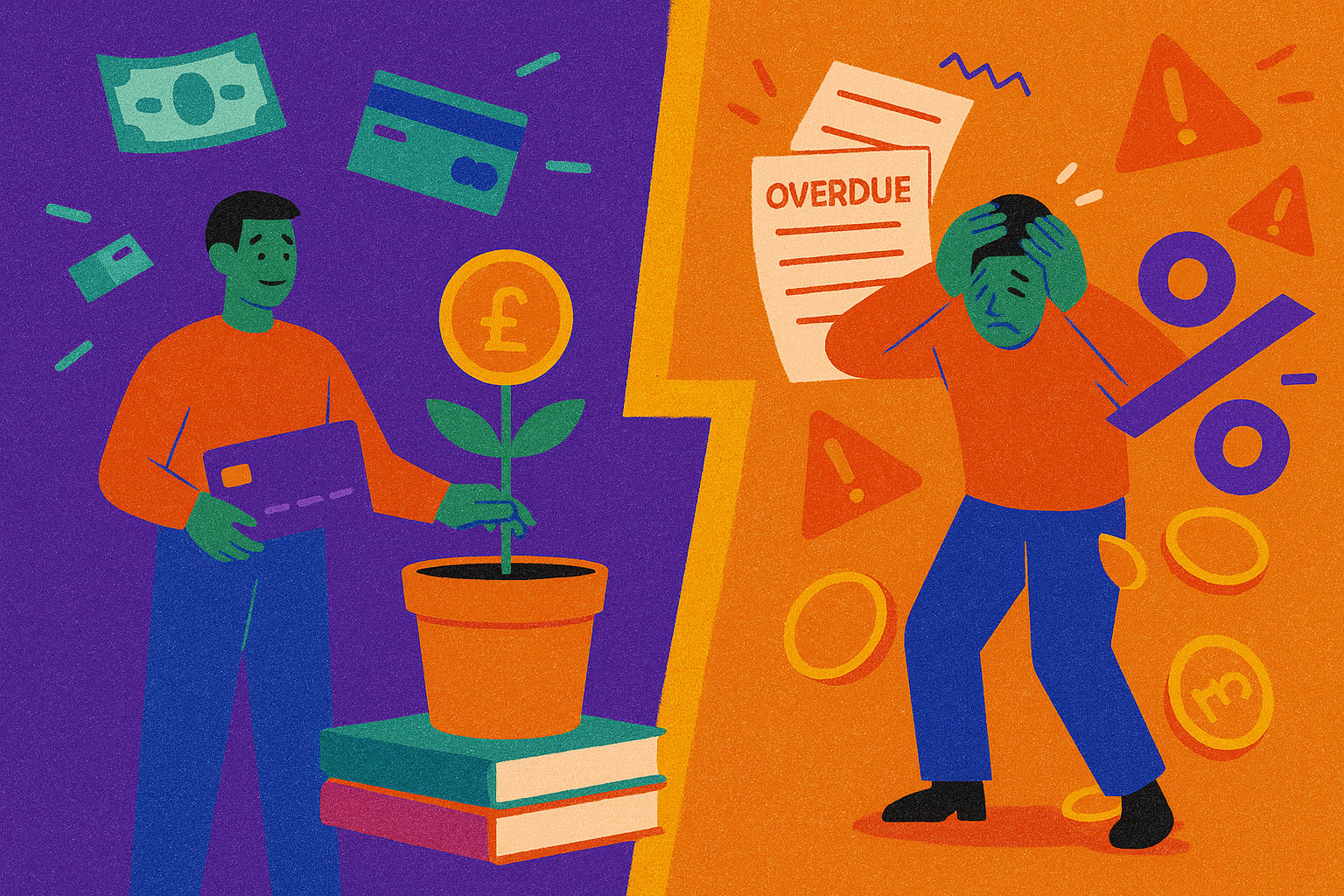
In this lesson, students build a clear understanding of income, expenditure, credit and debt, then apply that knowledge to real-world scenarios involving borrowing and agreements. They explore why people borrow, how interest changes what they owe and what makes an agreement fair or risky. By analysing mock contracts and personal budgets, students learn how to recognise responsibilities, spot red flags and make informed decisions before signing up for anything.
Maths:
PSHE:
This lesson supports the National Curriculum for Mathematics by enabling pupils to use number in real life financial contexts, including calculating income, expenditure, surplus and deficit. Pupils apply simple percentages to everyday problems such as adding interest to borrowed amounts and analysing how this affects future budgets. They use numerical reasoning to evaluate financial outcomes and compare responsible money management decisions.
This lesson supports PSHE Living in the Wider World objective LWW5 by helping pupils understand different forms of financial transaction, including income, expenditure, credit, debt, interest and contracts. Pupils explore ways to keep track of money, recognise the responsibilities within financial agreements, and evaluate the risks associated with borrowing and overspending. They develop practical strategies for monitoring finances and identifying unfair or misleading contract terms.