Year 8
IN THIS LESSON
National
Curriculum
Links
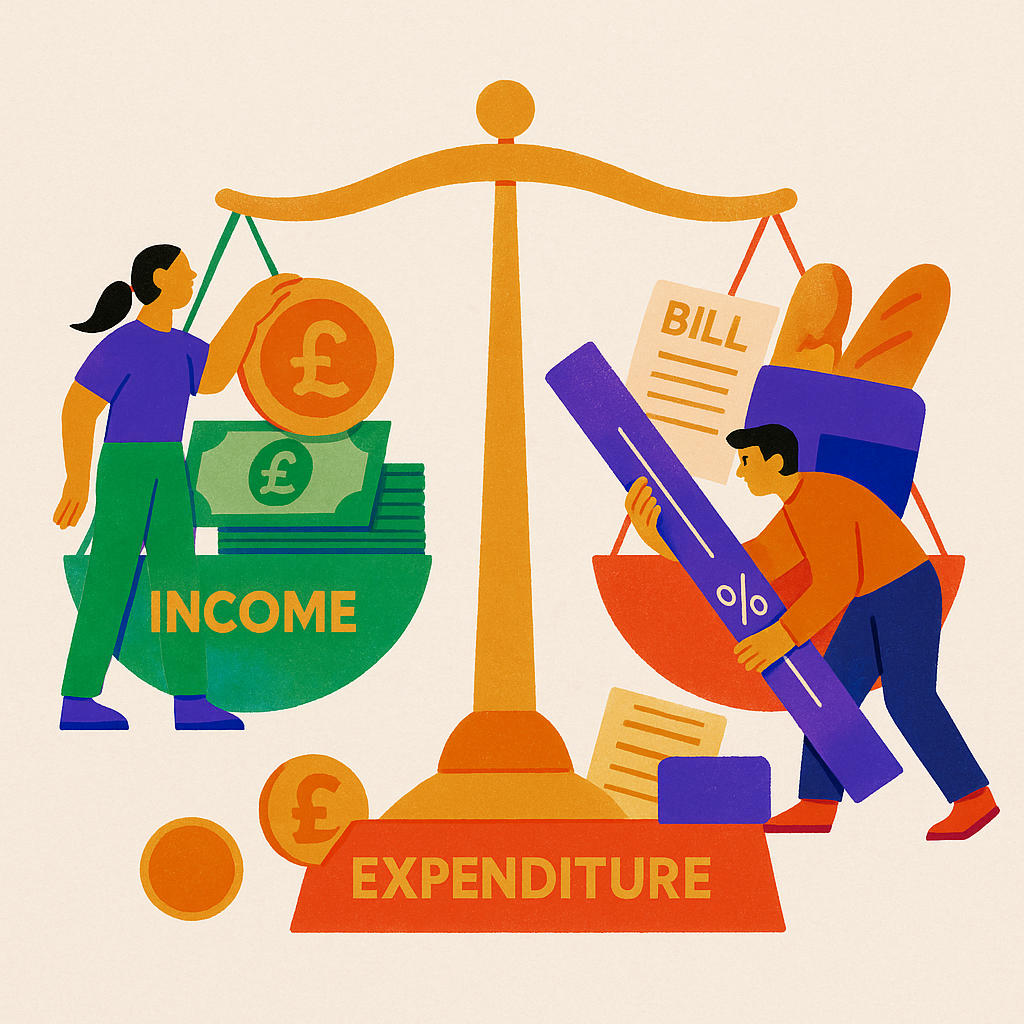
In this lesson, students explore how even a well-planned budget can be knocked off course by risks like borrowing, scams and impulse spending. They compare different payment methods, revisit key budgeting concepts and test their decision-making through a budgeting game where unexpected events force them to adjust their plans. By the end, students understand what makes a budget realistic, flexible and resilient in the face of real-life challenges.
Maths:
PSHE:
This lesson supports the National Curriculum for Mathematics by enabling pupils to apply ratio and proportion when allocating income across needs, wants and savings, calculate percentage increase and decrease in response to changing financial events, and interpret data presented in tables and percentage breakdowns. Pupils analyse surplus and deficit, compare spending patterns to recommended budgeting ratios, and justify adjustments using numerical reasoning.
This lesson supports PSHE by helping pupils understand how to budget effectively, manage income and expenditure, and use and interpret financial products such as debit cards, credit cards and subscriptions. Pupils explore how borrowing, scams and impulse spending can affect a carefully planned budget, and develop strategies to maintain financial stability, adapt to unexpected changes and avoid deficit.