Year 1
In this lesson:
National
curriculum
link
Money Awareness
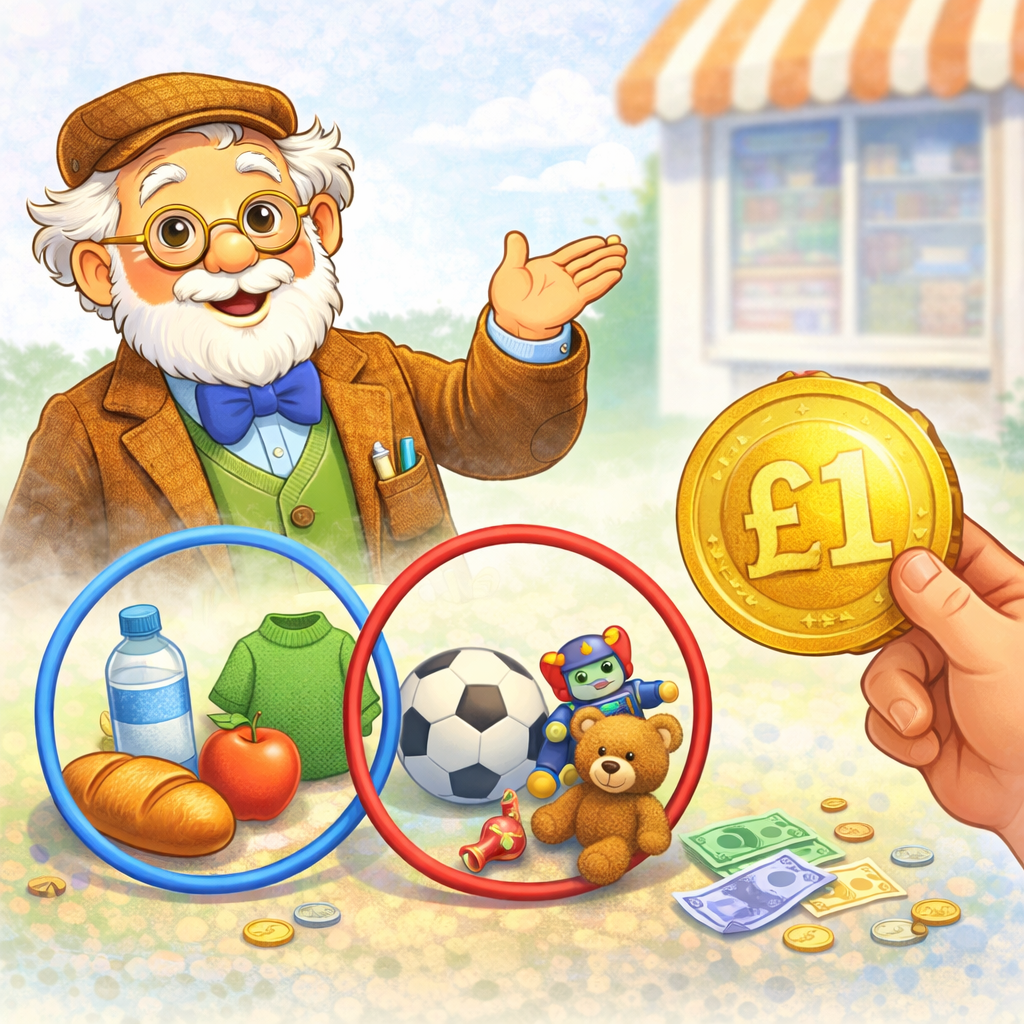
In this lesson, pupils are introduced to what money is and how it is used in everyday life. They explore different forms of money such as coins, notes, and cards, and learn that money is used to buy and pay for things in shops. Children begin to understand the difference between needs and wants and recognise that they cannot always buy everything, so they must make choices. Through discussion and practical activities, pupils start to see that spending money involves deciding what matters most.
Maths:
PSHE:
This lesson develops pupils’ understanding of money by helping them recognise different coins and understand their value. Through practical activities such as choosing items from a shop and discussing what they could buy with £1, pupils apply their knowledge in real life contexts. They begin to see money as something that can be counted, compared and used to make simple purchasing decisions.
This lesson supports pupils in understanding what money is used for and introduces key financial concepts such as needs, wants and making choices. By discussing what they would buy and why, pupils explore the difference between essential and non essential items. They also learn that choosing one item may mean not being able to choose another, helping them develop early decision making skills and an awareness of responsible spending.
Skill Descriptor: